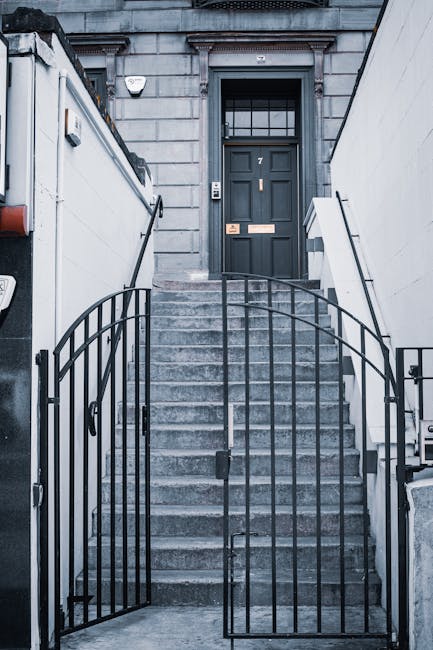
Gloucester Road flat removals stairs and lift access guide
Posted on 22/06/2026
If you are moving out of, or into, a flat near Gloucester Road, the stairs and lift situation can shape the whole day. One awkward stairwell, a small lift, or a last-minute access issue can turn an otherwise tidy move into a slog. This Gloucester Road flat removals stairs and lift access guide breaks down what matters, how to prepare, and how to avoid the usual headaches that creep up in London apartment moves. The aim is simple: make your move calmer, quicker, and far less stressful.
In practice, the difference between a smooth flat removal and a frustrating one often comes down to access. Is there a lift? Is it actually usable with bulky furniture? How many flights are involved? Can the van park close enough? These questions sound basic, but they are the ones that save time, money, and a fair bit of energy. And yes, they matter even more on busy streets where timings, loading space, and building rules all stack up.

Why Gloucester Road flat removals stairs and lift access guide Matters
Gloucester Road sits in a part of London where flats are often tucked into period conversions, mansion blocks, mansion-style buildings, and modern apartment developments. That mix is great for character, but it also means access can vary wildly from one address to the next. Some buildings have spacious lifts and wide landings. Others have narrow staircases, awkward turns, or lifts that are technically there but not especially helpful for a sofa. You see the problem.
For removals, access is not a minor detail. It affects labour, timing, vehicle positioning, and the amount of protection needed for walls, banisters, and floors. If a move is booked on the assumption that everything will glide through a lift, but the lift is tiny or out of service, the whole plan shifts. That is when delays happen, and delays can become extra cost. To be fair, it is one of the most common reasons a flat move feels harder than expected.
Good access planning also reduces the chance of avoidable damage. Tight corners, low ceilings, and old stair rails do not forgive careless handling. A careful, access-aware plan keeps the building, the furniture, and the removals team safer. If you want a broader overview of what professional moving support looks like, the services overview page is a useful starting point, and for apartment moves specifically, flat removals in South Kensington fits the same sort of access-heavy context.
Expert takeaway: In flat removals, access is not just about convenience. It is a planning factor that influences timing, staffing, protection materials, and whether your move stays on schedule.
How Gloucester Road flat removals stairs and lift access guide Works
The most efficient flat move starts with gathering access details before move day. That sounds obvious, but people still leave it late. The usual workflow is simple: measure, check, confirm, and then plan the load order around the building layout. Once that is done, the removal team can decide how many people are needed, what equipment to bring, and whether certain items should come down first.
Here is the basic process in plain English:
- Check the building layout. Note the number of floors, stair width, lift size, and whether there are landings with tight turns.
- Measure the awkward items. Sofas, wardrobes, mattresses, bed bases, mirrors, and appliances are the usual troublemakers.
- Confirm lift details. A lift that is available for people is not always suitable for furniture. Know the door width, internal size, and any booking restrictions.
- Ask about building rules. Some blocks require lift protection, padded blankets, booking slots, or advance notice for move-ins and move-outs.
- Check parking and loading access. The best staircase plan still struggles if the van cannot get close enough.
- Build the moving sequence. Heavy or bulky items should usually go first, but the exact order depends on the route in and out.
In London flats, the phrase "lift access" can be a little optimistic. Sometimes it is a compact passenger lift, sometimes it is a service lift, and sometimes it is a lift with rules that make it borderline useless during busy hours. That is why a proper pre-move check matters so much. If you are unsure how access affects vehicle choice too, the removal van South Kensington page offers a useful way to think about vehicle fit alongside building access.
For people who want help with the practical side of packing before the move, packing and boxes in South Kensington is also worth a look, because well-packed boxes are much easier to carry safely up and down stairs. Simple, but true.
Key Benefits and Practical Advantages
Planning around stairs and lifts does more than save time. It can change the whole tone of the move. When the access plan is clear, the removals team can move steadily instead of improvising. And improvising with a wardrobe on a winding staircase? Not ideal. Not ideal at all.
- Faster loading and unloading. Teams spend less time making decisions on the spot.
- Lower risk of damage. Furniture is handled with the right route and the right protection.
- Better quote accuracy. Access details help reduce surprise charges later.
- Less stress on move day. Everyone knows what to expect before the first box leaves the flat.
- Safer handling of bulky items. Heavy items are less likely to snag on stairs or lift doors.
- More realistic scheduling. If a fourth-floor walk-up is involved, the timing can reflect that properly.
There is also a quiet but important benefit: fewer misunderstandings. A customer might assume "there is a lift" means the job is straightforward, while the team is picturing a lift barely big enough for a vacuum cleaner. Clear access details remove that gap. That alone can prevent a lot of last-minute tension.
For some moves, access planning also affects whether storage should be part of the plan. If the timing between properties does not line up, or if a building has strict access windows, storage in South Kensington can make the whole process far more manageable.
Who This Is For and When It Makes Sense
This guide is for anyone moving in or out of a Gloucester Road flat where stairs, lifts, or awkward building access could influence the day. That includes renters, first-time buyers, landlords preparing a property, students, and anyone moving within South Kensington or nearby SW7 streets.
It is especially useful if:
- your flat is on an upper floor
- the lift is small, shared, or often busy
- the property has narrow stairs or sharp turns
- you are moving large furniture, a piano, or delicate items
- there are loading restrictions outside the building
- you need a tight move-in or move-out schedule
If you are a student, the pace and timing of the move can be especially tight around term dates. That is where a service like student removals in South Kensington can be helpful, because student flats often come with stair-heavy access and a pile of boxes that always seems larger than expected. Honestly, it happens every year.
This guide also makes sense if you are moving bigger household items and want the move handled carefully. For more specialised handling, furniture removals in South Kensington is the kind of service people often look at when access and item size need extra attention.
Step-by-Step Guidance
Here is a practical way to approach your Gloucester Road flat move so the stairs and lift access do not become a last-minute headache.
1. Walk the route in your head, then in real life
Start from the front door, not the van. Trace the route from the flat to the street. Notice the number of doors, bends, shared corridors, and stair landings. If a sofa has to pivot twice before reaching the lift, that is useful to know now, not at 8:15 on move day while everyone is sweating a bit.
2. Measure the key items
Do not measure everything. Focus on the awkward stuff: wardrobe height, sofa length, mattress size, fridge depth, headboard width, and any item with handles, wheels, or protruding parts. If it is an odd shape, measure it. Truth be told, "it looked smaller online" has caused many a tight corner problem.
3. Check the lift properly
Ask whether the lift is operational all day, whether it is bookable, and whether there are weight limits or floor protection requirements. Even a decent-sized lift can be awkward if the door opening is narrow. A passenger lift and a furniture-friendly lift are not the same thing. Not even close.
4. Find out about parking and waiting space
On Gloucester Road, kerb access can make or break the timing. If the van has to park further away, the team may need more time and more carrying distance. If there are loading restrictions, note them early. This is one of those practical details that sounds boring until it becomes expensive.
5. Book the right level of help
If the move involves multiple flights, bulky furniture, or a tricky lift, standard man-and-van support may not be enough. For a more tailored option, man and van South Kensington or removal services South Kensington can suit different move sizes, while removals South Kensington gives a broader overview of what full support can include.
6. Protect the building before you start
Cover floors where needed, protect lift doors and walls if the building requires it, and use blankets or wraps for furniture. In older buildings, walls and banisters often bear the scars of past moves. A careful team tries not to add to that collection.
7. Load in a sensible order
Heavy and awkward items should usually be loaded first, but stair access can affect the sequence. The goal is to avoid trapping smaller items behind a wall of boxes and furniture. That would be annoying, and a bit pointless, really.
Expert Tips for Better Results
After enough flat moves, a few patterns become obvious. The people who plan a bit more carefully usually have the calmest move days. Here are the details that tend to make the biggest difference.
- Send photos of the stairs and lift. Pictures show more than a written description ever will.
- Measure lift doors, not just lift interiors. The door opening is often the real limitation.
- Prepare for one awkward item to be the problem item. It is nearly always the sofa, bed base, or wardrobe.
- Keep corridors clear. Bottlenecks happen fast in apartment buildings.
- Use small boxes for books and heavy items. This is one of those basic tips that saves backs.
- Have a Plan B for lifts. If the lift is out of service, stair carrying may become the only option.
- Book early if access is tight. Good time slots tend to go first.
If your move is part of a bigger life change, such as buying a place or upgrading to a better flat, it helps to read around the move more widely. A practical local read like home purchases in Kensington can be useful for understanding the wider property picture, while living in Kensington what residents say gives a feel for day-to-day life in the area.
One more thing: if the move is time-sensitive and the access is tricky, same-day support may be worth exploring. It is not for every move, obviously, but when timing suddenly becomes the issue, same-day removals in South Kensington can be the practical answer.

Common Mistakes to Avoid
Most moving problems are not mysterious. They are usually predictable, which is annoying, because that means they were avoidable. Here are the mistakes that show up again and again.
- Assuming the lift is enough. A lift may be available, but not usable for your furniture.
- Not checking stair turns. A tight landing can stop a large item more effectively than a locked door.
- Ignoring parking distance. A longer carry adds time and fatigue.
- Leaving packing until the night before. That is how fragile items end up in the wrong box.
- Forgetting building rules. Some blocks want advance notice, lift booking, or protective materials.
- Underestimating the number of boxes. Small items multiply. Quickly.
- Booking without sharing photos or measurements. A vague description often leads to vague planning.
Another easy mistake is choosing a service based only on the headline price. It is tempting. Very tempting. But the cheapest quote on paper can become less attractive once stair carries, extra waiting, or access issues appear. If you are comparing options, the avoid hidden removal fees in South Kensington moves article is a sensible companion read.
Tools, Resources and Recommendations
You do not need a toolbox full of specialist gear to handle a flat move well, but a few practical items make life easier.
- Measuring tape for stairs, doors, lifts, and furniture dimensions
- Floor protectors or cardboard where building rules allow them
- Furniture blankets and wraps for corners, frames, and polished surfaces
- Strong tape and labels so boxes do not become a mystery stack
- Small sacks or bags for loose fittings, screws, and cables
- Photos on your phone of access points, lift interiors, and parking bays
On the planning side, it helps to think in terms of move type rather than just move size. A one-bedroom flat with four floors and no lift can be more demanding than a larger flat with direct lift access and close parking. That is why broad categories matter less than actual access conditions.
If you want to compare support styles, look at man with a van South Kensington for lighter moves, removal van South Kensington when vehicle space matters, and removal companies South Kensington when you need a fuller team and a more structured service.
For people who also care about business-like processes, the site's insurance and safety and health and safety policy pages are useful context for how careful moves are usually approached. That kind of reassurance matters when you are carrying a housefull of belongings up a stairwell.
Law, Compliance, Standards, or Best Practice
Flat removals are not usually about complex legal interpretation, but there are still practical standards and expectations worth respecting. In London blocks, building management rules often govern lift booking, loading times, floor protection, and access routes. Those are not optional in practice, even when they are not written in huge letters by the front door.
For movers, sensible best practice includes:
- protecting communal areas from damage
- keeping escape routes clear
- handling items safely to reduce risk of injury
- checking building-specific move windows before arrival
- being honest about access constraints during booking
Insurance is another area worth taking seriously. If an item is bulky, valuable, or awkward to carry, you want to know how the move is covered and what the limits are. For that reason, it is wise to review insurance and safety information before confirming any removals plan. It is one of those unglamorous steps that feels minor right up until it does not.
There is also a wider responsibility around respectful working practices. If you are choosing a provider, pages like modern slavery statement, accessibility statement, and recycling and sustainability can give useful reassurance about business standards and values. Not the flashiest reading, granted, but still relevant.
Options, Methods, or Comparison Table
Different access situations call for different approaches. Here is a simple comparison to help you think it through.
| Access situation | Typical challenge | Best approach | Notes |
|---|---|---|---|
| Ground floor with easy parking | Usually fast, but still needs careful loading | Standard removal support | Best for straightforward flats with minimal carrying distance |
| Lift access, but small lift | Furniture may not fit | Measure everything and plan item-by-item | Good photos save time and avoid guesswork |
| Several flights of stairs | Labour-heavy and slower | More crew time and a clear sequence | Use smaller boxes and protect corners |
| Lift out of service | Unexpected stair carry | Build in extra time or reschedule if needed | Always have a backup plan |
| No lift, tight stairwell | Bulky items may not turn corners | Specialist furniture handling | Disassembly may be necessary |
The right option depends less on the postcode and more on the actual route. A fourth-floor flat with a decent lift might be easier than a second-floor flat with a narrow turning stair. That is just how London buildings are sometimes. Charming on the outside, a little mischievous on the inside.
Case Study or Real-World Example
Here is a realistic example based on the kind of move that comes up often around Gloucester Road.
A couple were moving out of a top-floor flat in a mansion block not far from Gloucester Road station. The building had a lift, but it was compact and shared with other residents. Their biggest items were a bed frame, a two-seat sofa, a wardrobe, and a fridge-freezer. At first glance, they assumed the lift would make the move simple enough.
Then they checked the actual measurements. The sofa would fit only if tipped carefully. The wardrobe would not fit at all unless it was dismantled. The lift was usable, but only for one item at a time, and loading had to happen in a quiet time slot. After that discovery, they changed the plan: the wardrobe was disassembled, the fridge was moved first, and an extra team member was added to handle stairs and lift coordination.
What changed the outcome? Not magic. Just access planning.
The move still took effort, of course, but it stayed controlled. No rushed lifting. No awkward panic at the stair bend. No "we should have checked that sooner" moment, which is always a relief. In our experience, that is exactly how good removals should feel: not dramatic, just steady and manageable.
Practical Checklist
Use this before you book, and again the day before the move.
- Confirm whether there is a lift, and whether it is suitable for furniture
- Measure lift doors, stair widths, and any tight corners
- List the largest and heaviest items separately
- Check parking and loading access near the building
- Ask the building manager about move-in or move-out rules
- Take photos of the route from flat to street
- Label boxes clearly and keep heavy items in small boxes
- Disassemble furniture that may not fit through the route
- Protect floors, walls, and shared areas where required
- Keep key documents, chargers, and essentials aside for easy access
Quick summary: if you know the route, the measurements, the lift details, and the parking situation, you are already ahead of most stressful flat moves.
Conclusion
A Gloucester Road flat move becomes much easier when stairs and lift access are treated as core planning details rather than afterthoughts. That is the whole point of this guide. Measure the route, check the lift, confirm parking, and share the details early. The result is usually a faster move, fewer surprises, and a much better experience all round.
If your flat move involves a tricky staircase, a small lift, or a tight London loading space, it is worth asking for advice before move day rather than hoping it will all sort itself out. It rarely does, not in this part of London anyway. A little preparation goes a long way, and it can make the difference between a frantic morning and one that feels properly under control.
Get a free quote today and see how much you can save.
And if you are still at the planning stage, take it one step at a time. That is usually how the best moves happen.